AI Robot Toys for Kids: The 2026 Honest Buyer's Guide
AI robot toys promise a talking friend for your child. This guide separates real learning from hype, covers privacy and age risks, and shows what to check.
By 2k50 Tech Team
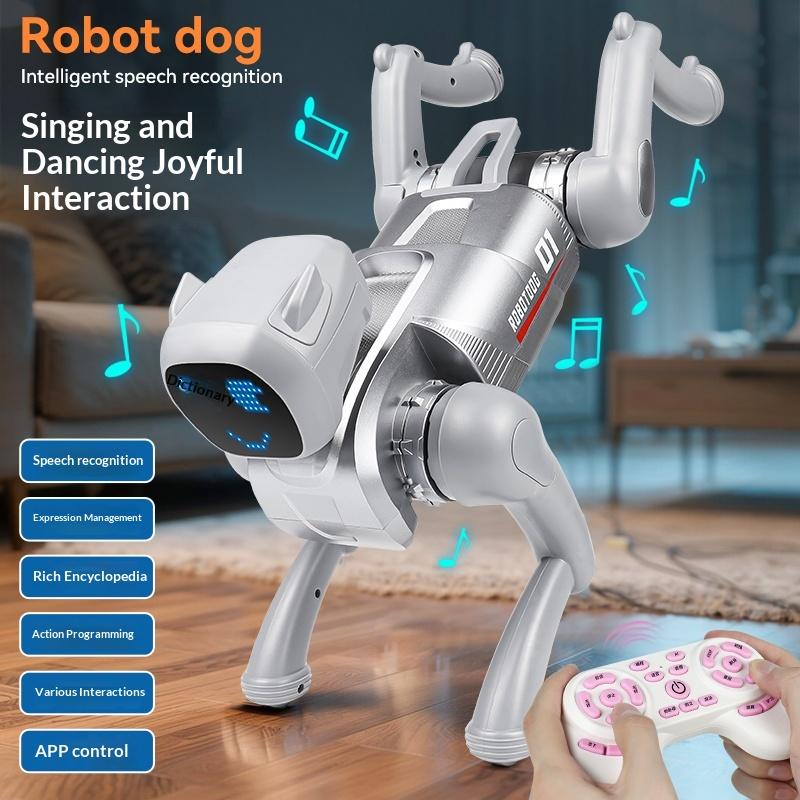
Your child asks a toy a question, and the toy answers back — not with a recorded phrase, but with a sentence it built on the spot. That is the promise that has made AI robot toys one of the most gifted, and most argued-about, categories of 2026. Parents buy them hoping for a patient tutor and a tireless playmate. Researchers warn about privacy, emotional attachment, and answers that slip past safety filters. Both sides are describing the same products, because "AI robot toy" now covers everything from a $27 talking learning robot to a $2,900 robotic dog with a cloud subscription.
This guide sorts the category honestly: what the word "AI" actually means inside a toy, which type fits which age, the seven checks that matter before you buy, what the total cost really is, and who should skip AI toys entirely. It is written for parents, not for toy companies, and it names the risks plainly — because a toy that listens to your child deserves more scrutiny than a toy that just lights up.
What "AI" Actually Means Inside a Toy
The label "AI-powered" tells you almost nothing by itself. Before comparing models, find out which of these four things the toy actually does:
1. Scripted responses. The toy recognizes a small set of trigger words and plays a matching pre-recorded answer or action. It feels interactive, but it cannot hold a conversation or answer an unexpected question. Most budget robot dogs and dancing robots live here, and that is not necessarily a flaw — scripted toys are predictable, usually work offline, and collect little or no data.
2. Voice-command control. The toy understands commands like "dance," "tell me a joke," or "follow me" and performs an action. Speech recognition may run on the device or in the cloud. The toy is not reasoning; it is matching speech to a command list. This is the sweet spot for younger children: responsive enough to feel alive, simple enough to stay predictable.
3. Conversational AI companions. The toy sends what your child says to a large language model in the cloud and speaks back a generated reply. These are the toys that can tell stories, answer homework questions, and remember earlier conversations. They are also the toys behind nearly every 2026 safety headline, because a model that can say anything can occasionally say the wrong thing, and because every conversation is data leaving your home.
4. Programmable robots. The child builds or codes the robot's behavior — with buttons, block coding, or real code like Python. The "intelligence" is the child's own program, not a chatbot. These toys teach the most durable skill in the category, and they sidestep most privacy worries because many work without an internet connection at all.
Ask the seller one question before anything else: which of these four is it? If the listing cannot answer clearly, treat the "AI" label as marketing and judge the toy on what it demonstrably does.
The Four Types, Side by Side
| Type | Best for | Typical price | Watch out for | |---|---|---|---| | Robot pets (dogs, cats, dinosaurs) | Companionship, imaginative play, ages 5–10 | $27–$500 | Cloud chat on premium models; novelty fading in weeks | | Conversational learning robots | Questions, stories, language practice, ages 6–12 | $27–$300 | Subscriptions; inappropriate answers slipping through filters | | Coding and STEM robots | Building, logic, programming, ages 8+ | $70–$650 | Difficulty cliffs — too easy bores, too hard frustrates | | Dancing and trick robots | Pure fun, parties, younger kids | $25–$100 | Short battery life; loud speakers; fragile limbs |
A robot dog can belong to any row depending on its brain. A $43 educational robot dog that responds to voice commands is a different product from a $499 wheeled petbot running a cloud language model, even though both are "robot dogs." Compare brains, not bodies.
The Age Question Comes First
Age is the decision that should override every other feature, and in 2026 the expert guidance got sharper. In January 2026, Common Sense Media released new guidance after evaluating AI companion toys: children aged 5 and under should not be given AI toy companions, and parents should exercise extreme caution before buying them for children aged 6 to 12. The researchers found that 27% of AI toy outputs in their testing were inappropriate for kids, and that the toys are designed to create emotional attachment through memory, empathy-like responses, and encouragement to keep engaging.
That does not mean every robot toy is off the table for a young child. It means the type matters enormously by age:
Under 5: skip conversational AI entirely. A toddler does not need a toy that remembers conversations. Choose simple, sturdy, offline toys: a robot pet that barks and does tricks on button presses, or a push-and-code robot with no microphone at all. Small parts, battery-compartment security, and washable surfaces matter more than any "smart" feature.
Ages 5–8: scripted and voice-command toys, with a parent nearby. This is the sweet spot for a first robot pet. The child gets the magic of a toy that responds to them, while the toy's behavior stays predictable. Keep connected features off if the toy allows it, and treat the first month as a trial: if the toy becomes the default companion instead of one toy among many, rotate it out.
Ages 8–12: the window where robots teach the most. Children this age can handle a coding robot, understand that a chatbot is software rather than a friend, and tell a parent when an answer seems wrong. This is also the age where a conversational toy can genuinely help: language practice, storytelling, and homework explanations, supervised and time-limited.
Ages 12 and up: buy for the skill, not the novelty. A teenager will outgrow a talking pet in a week. What holds their attention is a challenge: a programmable kit, a build-your-own robot, or a platform with a real coding path from blocks to Python. If the toy cannot grow with the child's skill, it is a short-term purchase at a long-term price.
The Seven Checks Before You Buy
1. Where does your child's voice go?
This is the single most important check, and the one most listings dodge. Ask: does the toy record conversations? Is speech processed on the device or sent to a server? Is it stored, for how long, and can you delete it? A government safety checklist published in 2026 for parents puts it bluntly: if the answers are unclear, it may be safer to avoid the product. Prefer toys that process speech on-device or that work fully offline. If a toy needs the cloud to talk, look for a readable privacy policy that names the AI provider, the retention period, and an opt-out — and be suspicious of any listing that promises "cloud AI features" without one. Independent testing reported in 2026 found that some popular AI toys transmitted audio to third-party servers and, in separate incidents, exposed chat transcripts through unsecured web portals. Your child's bedroom is not the place to beta-test a company's data practices.
2. What stops a bad answer?
Conversational toys have content filters, and filters fail. Published 2026 testing found that AI companion toys could produce inappropriate material and fail in conversations about sensitive topics. Before buying, check whether the toy has a parental dashboard: can you set topics, review conversation history, set time limits, and turn off chat while keeping the toy's other features? A toy with no parental controls and no conversation history is a black box you are handing to a child. Test it yourself in the first week: ask it awkward questions, including ones a curious child would ask, and see what comes back.
3. What does it cost in total, not just at checkout?
The sticker price is often the smallest number. Some conversational toys require a monthly subscription for chat, content, or app features — and a toy that stops talking when the subscription lapses is a very expensive paperweight. Premium robot pets can add hundreds of dollars a year in cloud plans; one flagship robotic dog lists at $2,899.99 including a three-year cloud plan, with roughly $300 per year after that. Before buying, add up: the toy, any subscription, replacement batteries or chargers, and the app's paid content. A budget learning robot at $26.99 with no subscription can be a better deal than a $299 toy with a $10 monthly plan, even before you count the privacy difference.
4. Will it survive real play?
A robot toy will be dropped, squeezed, sat on, and carried by one limb. Check for sturdy ABS plastic construction, secure limbs, and a battery compartment that requires a tool to open — safety guidance for 2026 specifically flags easy-access battery doors as a risk for children under 7. Look for USB-C charging rather than a proprietary charger that becomes useless when lost, and aim for at least 60 minutes of active play per charge; anything less turns playtime into a negotiation about the charger. Read reviews for build quality complaints before trusting a glossy product page.
5. Does it need the internet to be fun?
A toy that is only fun online is a toy that stops working during an outage, on holiday, or when the manufacturer shuts down its servers — a real risk in a fast-moving category where companies disappear. Prefer toys whose core play works offline: tricks, games, dances, and coding that run on the device. Treat cloud chat as a bonus feature, not the product. If everything the toy does depends on a server, ask yourself what you own if that server goes dark in two years.
6. Does it teach, or does it just talk?
There is a difference between a toy that answers questions and a toy that builds a skill. A conversational toy that answers homework can quietly become a shortcut machine. A coding robot that makes a child sequence commands, debug a failed route, and try again teaches something no chatbot can: how to think through a problem. The best 2026 guidance for parents is simple: a good AI toy should encourage questions, problem-solving, and storytelling — and it should complement books, parents, teachers, and outdoor play, not replace them. If a toy's main talent is keeping a child occupied alone for hours, that is a warning sign, not a feature.
7. How long before the novelty fades?
Almost every robot toy is thrilling for two weeks. The ones that last have one of three things: a progression path (new skills, levels, or coding challenges), a social element (games to play with siblings or friends), or genuine open-ended play (building, customizing, inventing). Scripted pets without progression fade fastest — children learn every trick, and the toy has nothing new to say. When comparing two toys, ask: what will this toy do in month three that it cannot do in week one? If the answer is nothing, buy the cheaper one.
What to Buy at Each Budget
Under $50: the honest starting point. This is where most families should start, and where expectations should be lowest and satisfaction highest. A budget educational robot dog at $42.64 gives a younger child a responsive pet that follows commands and plays, without a subscription or a cloud account: the [Educational AI Smart Robot Dog Toy](https://www.2k50.store/product/cj-prod-2605111011551629000). A compact AI learning robot at $26.99 is a reasonable first conversational toy for an older child — but only with a parent testing its answers first and keeping chat sessions supervised: the [Doudou AI Learning Robot](https://www.2k50.store/product/cj-prod-2604300910501610800). At this price, judge the toy as a toy: is it fun, sturdy, and safe? If the "AI" turns out to be scripted phrases, that is fine at this price, as long as you knew before buying.
$50–$150: the sweet spot for most kids. Expect better voice recognition, more tricks, rechargeable batteries, and often an app with games or basic coding. This is the range where a first coding robot makes sense for an 8-year-old, and where a mid-range robot pet can hold a child's interest beyond the first month. Still check for subscriptions before buying — some mid-range toys gate their best content behind a plan.
$150–$500: serious hobby territory. Here you find the well-known educational robots with real conversational ability, parental dashboards, and structured learning content, as well as premium wheeled petbots with advanced language models. Buy in this range only when you know exactly which feature justifies the price — a specific coding curriculum, a proven parental dashboard, or a petbot the whole family will use. Otherwise, the extra money mostly buys a smoother version of the same conversation.
$500 and up: know exactly why. Flagship robotic pets and developer-grade quadrupeds are remarkable machines, but they are not children's toys in the ordinary sense. They carry cloud plans, need regular software support, and demand an adult owner as much as a child user. Unless the child is already deep into robotics and will use the platform for years, this money is better spent on a mid-range robot plus books, kits, and activities around it.
Who Should Skip AI Robot Toys
Not every child benefits, and honest guidance says so. Skip conversational AI toys for children aged 5 and under. Skip them if the manufacturer cannot explain its data practices in plain language. Skip them if your child already struggles with screen time or solitary play — an always-available artificial friend can deepen that pattern rather than balance it. Skip cloud-dependent toys if you cannot supervise the first weeks of use. And skip any toy whose subscription turns a gift into a monthly bill you did not agree to. A traditional robot kit, a building set, or a simple remote-control robot can deliver most of the fun with none of the data questions — and for some children, that is simply the better gift.
The First-Week Checklist
Once the toy arrives, spend one week as its supervisor before handing it over fully. Charge it fully and time a play session to check real battery life. Test its answers with awkward, curious, and silly questions, and read any conversation history the app keeps. Check the battery compartment, the volume limit, and whether small parts detach under rough handling. Set the parental controls, time limits, and topic restrictions before the child discovers the settings menu. Decide together where the toy lives at night — a toy with a microphone does not belong in a bedroom unsupervised — and agree on when it gets put away in favor of other play. If anything in this week worries you, return it: the return window is your last safety feature, and it is free.
The Bottom Line
The best AI robot toy is not the smartest one. It is the one whose brain matches your child's age, whose data practices you can read and accept, whose total cost you know upfront, and whose play still delights in month three. Start cheap, prefer offline play, supervise the first week, and let the child's curiosity — not the marketing — decide whether a smarter toy is worth it next time. The robots will keep getting cleverer. Your job is to make sure the cleverness serves the child, not the other way around.