Automatic Pet Feeders: The 2026 Honest Buyer's Guide
Automatic pet feeders promise perfect portions on a schedule, but jams, power cuts and wrong kibble can ruin it. The 7 decisions that matter before you buy.
By 2k50 Tech Team
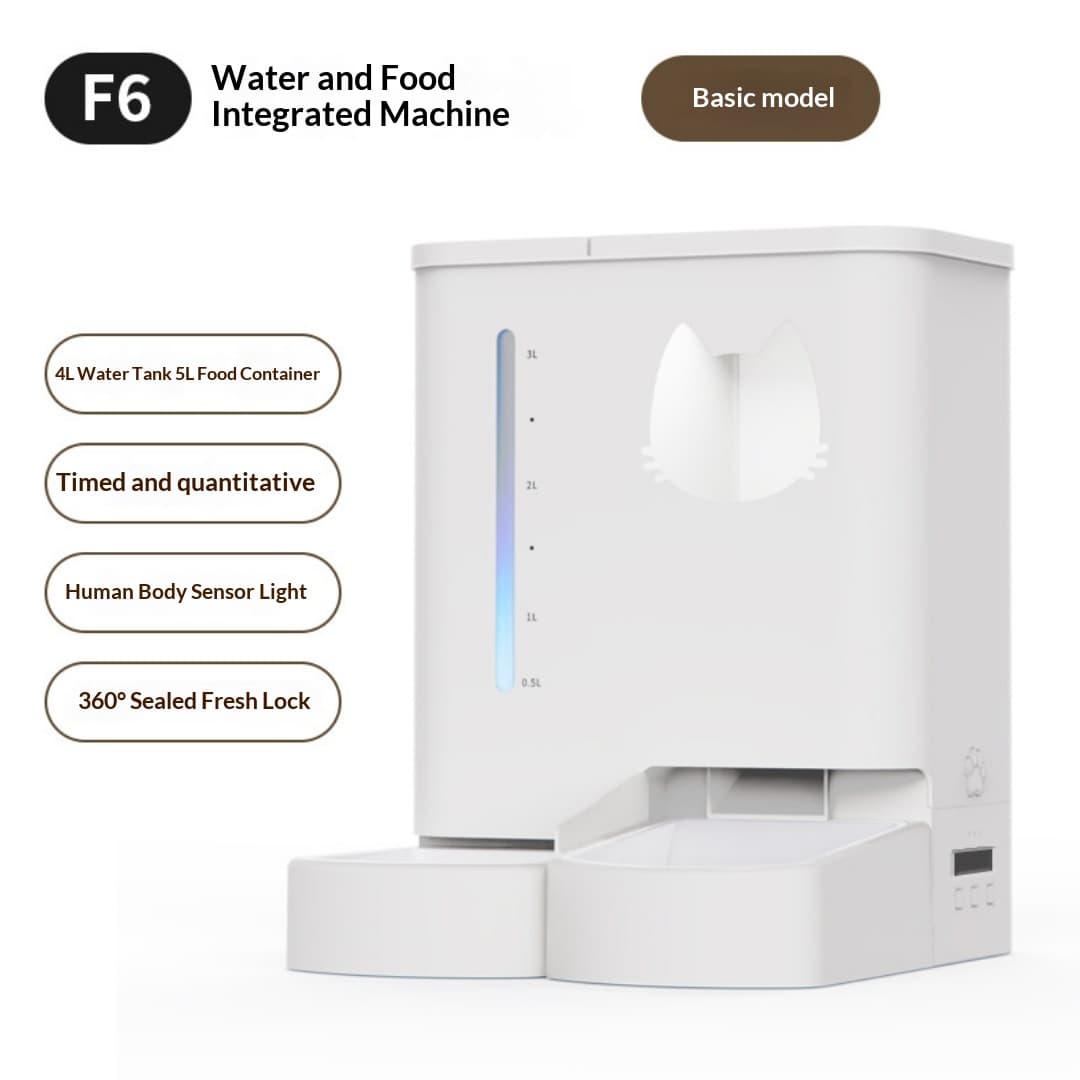
Automatic Pet Feeders: The 2026 Honest Buyer's Guide
Your cat wakes you at 5 a.m. for breakfast. Your dog inhales dinner in ninety seconds and begs for more. You scoop kibble by eye, and the scoop is never the same twice. An automatic pet feeder promises to end all three problems at once: the same measured portion, at the same times, every day, whether you are home or not.
That promise is mostly real — and it is the reason these machines are one of the best-selling pet gadgets of the last few years. But the gap between a feeder that quietly does its job for years and one that jams, loses its schedule, or gets outsmarted by your pet in week one is wider than the price tags suggest. This guide explains how the different feeder types actually work, the seven decisions that matter before you buy, and who should skip the category entirely.
How Automatic Pet Feeders Actually Work
Every automatic feeder is one of five designs, and the design decides almost everything about what it can and cannot do:
1. Gravity feeders. A hopper refills the bowl as your pet eats. No power, no schedule, no portion control. They are cheap and they never jam — but they are the opposite of a portion tool. A pet that overeats will simply keep eating. Only useful for genuinely self-regulating animals that need a buffer between refills.
2. Programmable hopper feeders. The workhorse of the category. An auger or rotating gate drops a measured amount of dry kibble into the bowl on a schedule, typically 4 to 6 meals per day. This is the design most buyers should be comparing, and the rest of this guide focuses on it.
3. Timed rotating-tray feeders. A carousel of sealed compartments rotates open at set times. These are the only common design that handles wet food, because each compartment stays sealed until its turn. The trade-off is capacity: usually 5 to 6 meals total, and wet food still only stays safe for a limited window at room temperature.
4. Smart app feeders. A programmable hopper plus Wi-Fi, an app, and often a camera. You can adjust meals remotely, get a notification when a meal is dispensed, and watch your pet eat. The convenience is real; the dependence on your home network is the catch, covered below.
5. Microchip and selective feeders. The lid opens only for the pet wearing the right microchip or tag. These solve a different problem — food theft in multi-pet homes — not scheduling. They do not dispense meals by themselves, and they cost significantly more.
For most cat and dog owners, the realistic choice is between a programmable hopper feeder and a smart app feeder. The decision factors below apply to both.
The Seven Decision Factors That Actually Matter
1. Portion mechanism and accuracy
This is the factor that decides whether the feeder actually helps. Most hopper feeders dispense in fixed units — a rotating cup, an auger turn, a gate opening — and you program a number of units per meal. The mechanism is consistent, but the units themselves are not perfectly uniform: kibble pieces vary in size, and the amount that falls per unit drifts slightly as the hopper empties.
In practice, a decent feeder lands within roughly 1/8 cup of the target per meal, far better than hand-scooping, where studies and owner tests routinely find scoops off by a quarter of the label amount. That is enough for weight management and prescription diets — provided you do the portion math in the next section rather than trusting the feeder's default settings.
What to check: whether portions are adjustable in small steps (finer steps matter for cats and small dogs), and whether the feeder lets you set different portion sizes per meal, not just one size repeated all day.
2. Kibble size and jamming
Jamming is the number-one real-world failure of hopper feeders, and it is almost always a kibble problem, not a motor problem. Most augers handle pieces up to about 12 to 15 mm in diameter. Oversized or irregularly shaped pieces bridge across the outlet and block it; crumbs and very small pieces slip past the gate and over-dispense.
Before you buy, measure your pet's actual kibble. Round pieces between roughly 5 and 12 mm are the sweet spot for most dispensers. If your pet eats large-breed kibble, triangular pieces, or freeze-dried raw bits, check specifically that the feeder you are considering handles that size — or switch to a compatible kibble. Some newer feeders include an anti-jam sensor that detects a blockage and reverses the mechanism; that feature is worth real money if your kibble is on the large side.
A feeder with Wi-Fi app control, a 4.5-litre sealed hopper, and a weight and anti-jam sensor core is an example of this newer generation: the sensor watches the dispensing flow rather than blindly trusting the motor, which is exactly the right place to put the intelligence. A model like the [Smart Automated Pet Feeder with portion control](https://www.2k50.store/product/cj-prod-2094310546323726338) ($70.72) fits that description, with app scheduling and a scheduled meal alarm alongside the anti-jam sensing.
3. Power and schedule memory — the two outages that matter
There are two separate failures buyers confuse into one: a power cut and a Wi-Fi outage. They need different answers.
Power: insist on dual supply — a mains adapter plus battery backup. A feeder that runs only on mains power stops feeding the moment your electricity does, and a feeder that runs only on batteries dies silently when the cells run out. With dual supply, a blackout changes nothing. Test the battery backup quarterly; batteries left in a feeder for a year are the ones that leak or die unnoticed.
Wi-Fi: a smart feeder that stores its schedule on the device keeps feeding when your network drops. A feeder that depends on the cloud to trigger meals does not. This is the question to ask before buying any app feeder: "If my router dies on Friday, does Saturday's breakfast still dispense?" If the answer is no, that feeder is not a feeder you can leave for a weekend. Note also that most smart feeders require a 2.4 GHz network; modern routers that broadcast 5 GHz only will not connect to them without a settings change.
4. Capacity and freshness
A 3-litre hopper holds roughly 1.2 to 1.5 kg of kibble — about two weeks of food for one cat. A 4.5-litre hopper stretches further and suits medium dogs or two cats sharing a schedule. But bigger is not automatically better: dry food oxidizes once exposed to air, and kibble sitting in a hopper for a month goes stale. The practical rule is to fill for no more than two weeks at a time, whatever the hopper size, and to use the desiccant pack most feeders include in the lid. Replace desiccant every month or two; a saturated pack does nothing.
A sealed, airtight hopper lid matters twice over: it keeps kibble fresh and it keeps a determined pet out, which brings us to the next factor.
5. Lid security and tamper-proofing
Pets solve puzzles. Owners report cats learning to paw food out of poorly sealed chutes, dogs nosing lids open, and lightweight feeders getting tipped over entirely. A feeder fails the moment your pet can help itself, because then portions are unlimited again.
What to look for: a locking lid, a sealed dispensing chute, and enough weight or a non-slip base that the unit cannot be tipped. Heavy, low-centred designs beat tall, light ones. If your dog is large or determined, budget for a feeder built for that — a lightweight cat feeder will not survive a large dog's attention.
6. Cleaning access
Kibble leaves oil and dust. Every part that touches food — hopper, chute, bowl — accumulates residue, and the smell eventually becomes the reason a feeder gets retired to a cupboard. Before buying, check which parts detach and wash. Stainless steel bowls are easier to keep clean than plastic ones and do not hold odours the same way. A weekly wipe-down of the bowl and a monthly wash of the hopper and chute is a realistic maintenance routine; if a feeder's hopper cannot be removed at all, that routine is impossible and you should buy something else.
7. Multi-pet homes and special diets
One bowl cannot ration two animals. If one cat steals the other's food, a single scheduled feeder does not solve your problem — it schedules the theft. Your options are a dual-bowl feeder (which only works if both pets share fairly), separate feeders in separate rooms, or a microchip feeder that opens only for the right pet. For prescription diets, the microchip feeder is the honest answer even at its higher price: it is the only design that controls *who* eats, not just *when*.
The Portion Math (Do This Before You Program Anything)
A feeder dispenses what you tell it to. The most common owner error is programming the feeder's default or copying the bag's "cups per day" figure without adjusting for the pet in front of you.
Step 1: get the daily allowance from your vet or the food label, adjusted for your pet's actual weight and activity. Bag guidelines are written for an average animal; overweight pets, seniors, and neutered cats usually need less than the bag says.
Step 2: divide the daily allowance across the number of meals, never repeat the full amount per meal. A cat on 1/2 cup per day fed four times gets 1/8 cup per meal. A dog on 2 cups per day fed twice gets 1 cup per meal. This sounds obvious, and it is the mistake most often reported in owner forums.
Step 3: run the feeder for a week while you are home and weigh what actually lands in the bowl. Compare it against the target. Adjust the portion setting, not your guess. Only after a week of verified portions should you trust the feeder for a trip.
Meal frequency itself: many vets suggest splitting a cat's daily food into several small meals, and most adult dogs do well on two meals a day. Ask your vet which schedule suits your pet — the feeder executes the plan; it does not write it.
Wet Food: The Hard Limit
Standard hopper feeders are dry-kibble only. Wet food spoils at room temperature and clogs dispensing mechanisms. If your pet eats wet food daily, your options are a rotating-tray feeder with sealed compartments (which buys you hours, not days), a refrigerated feeder (expensive, niche), or the practical compromise most owners land on: dry food in the automatic feeder for scheduled meals, plus manually served wet food when you are home. Do not put wet food in a hopper feeder. It will not work, and cleaning it out is miserable.
Who Should Skip an Automatic Feeder
This is the section most buying guides leave out, and it matters:
A feeder is also not a substitute for supervision. It handles scheduled meals for a short trip, but it does not replace water checks, litter, or a human noticing that something is wrong. For anything longer than a day or two, arrange a check-in from a neighbour or sitter even with a feeder running.
The First-Week Checklist
Do not trust any feeder for travel until it has passed this week:
1. Measure your kibble. Confirm it falls inside the feeder's stated size range. 2. Run a full week on your normal schedule while you are home. Weigh dispensed portions against your target daily. 3. Test the power cut. Unplug the feeder and confirm the battery backup keeps the schedule. 4. Test the Wi-Fi outage. Turn off your router and confirm the next meal still dispenses on time. 5. Watch your pet's reaction. A loud motor can teach a nervous cat to fear the machine. Run the first cycles while you are home, with treats near the feeder, and let a cautious pet approach on its own terms. 6. Check the lid. Try to open it the way your pet would. If you can pry it, so can they.
If any test fails, fix it before you travel — a feeder that fails on Tuesday while you are in the office is an annoyance; the same failure while you are away for the weekend is a hungry pet.
Frequently Asked Questions
Are automatic pet feeders good for portion control? Yes — this is their main strength. A motor dispenses the same measured portion at the same time each day, far more consistently than hand-scooping, which drifts. But the feeder only enforces the portion you program, so the portion math above matters more than the machine.
Can they handle wet food? Only feeders designed for it: rotating-tray models with sealed compartments, or refrigerated feeders. Standard hopper feeders are dry-kibble only.
What is best for two pets? A dual-bowl feeder if both animals share fairly, separate feeders in separate rooms if they do not, or a microchip feeder if one pet steals the other's prescription food.
Do they work when the Wi-Fi is down? Only models that store the schedule on the device. Check this specifically before buying any app feeder, and prefer dual power (mains plus battery backup) so a blackout does not erase anything either.
Can I leave my pet alone for two days with a feeder? For scheduled meals, yes, after the first-week checklist above. But a feeder does not replace supervision: water, litter, and a jam or power failure all still need a backup plan. Arrange a daily check-in for anything beyond a short trip.
The Bottom Line
Buy a programmable hopper feeder if your pet eats dry kibble, you want consistent portions on a schedule, and you are willing to spend one week verifying it before trusting it. Prioritise, in order: a portion mechanism your kibble actually fits, dual power with battery backup, a schedule that survives a Wi-Fi outage, a locking lid your pet cannot defeat, and parts you can actually wash.
If budget is the binding constraint, a simpler scheduled feeder without app control still delivers the core benefit — consistent portions on a schedule — as long as it passes the same first-week tests. A basic model like the [Automatic Dog Feeder](https://www.2k50.store/product/cj-prod-2093244980022652930) ($21.03) with Wi-Fi app control and a 4.5-litre sealed hopper shows that the essentials do not require a premium price.
Skip the category if your pet eats wet food exclusively, grazes happily at a healthy weight, or needs you watching the bowl for medical reasons. And whatever you buy, remember what the feeder is for: it is a tool that executes a feeding plan. The plan itself — how much, how often, and whether your pet is actually eating it — still belongs to you and your vet. For the rest of the pet-tech setup, the same discipline applies: automate the routine, but keep checking the animal. A companion read on the other end of that routine is the [self-cleaning litter box guide](/article/self-cleaning-cat-litter-box-2026), which applies the same test-before-you-trust logic to the litter tray.