Automatic Plant Watering Systems: 2026 Buyer's Guide
Pump kits vs gravity drippers, timer modes, and the anti-siphon detail that floods floors — a 2026 guide to keeping indoor plants watered safely while away.
By 2k50 Tech Team
Automatic Plant Watering Systems: 2026 Buyer's Guide
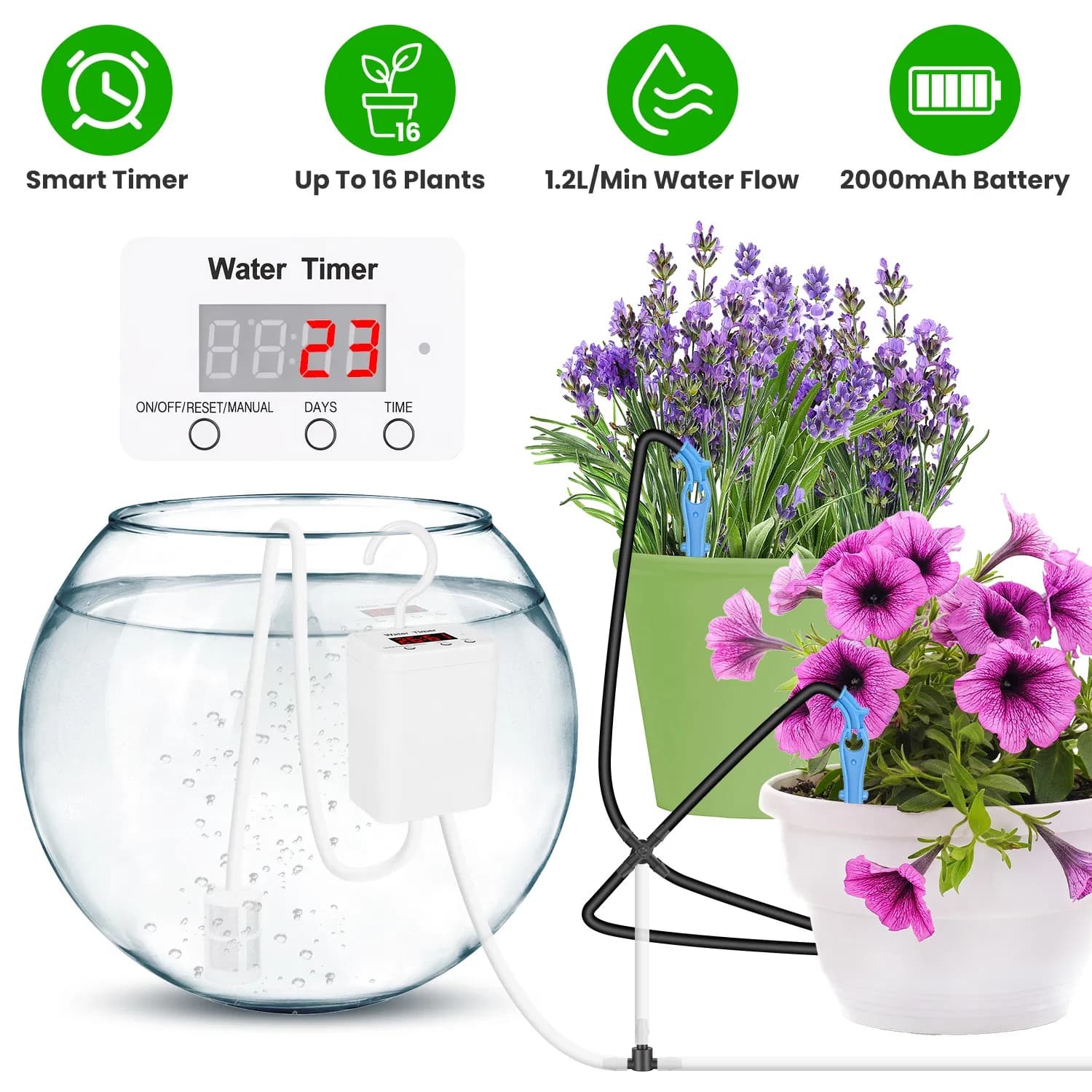
Keeping plants alive while you're away used to mean begging a neighbor or coming home to a crime scene of brown leaves. Automatic plant watering systems promise to fix that — a pump, a timer, some tubing, and up to fifteen pots watered on schedule without you touching a can.
The promise is mostly real. The catch is that these kits vary wildly in what they actually automate, and the cheapest ones introduce a failure mode most buyers never think about until their floor is wet: siphoning. This guide explains how the different systems work, the seven things that actually matter when you choose one, and who should skip the whole category.
How These Systems Actually Work
Every automatic plant watering kit is some combination of three ideas:
1. Pump-based drip kits. A small electric pump sits in (or next to) a water reservoir — a bucket, a jug, anything that holds water. On a timer, it pushes water through thin tubing to drip stakes in each pot. The better kits add a rechargeable battery so watering continues during a power cut, and an anti-siphon valve so water doesn't keep flowing by gravity after the pump stops. This is the most common design for indoor collections.
2. Gravity-fed drippers. No pump, no power. A raised reservoir feeds water down through tubing by gravity, often regulated by adjustable drip heads or a simple timer valve. Cheap, silent, and battery-free — but they only work if you can place the reservoir *above* your plants, which is awkward in most apartments, and flow rate changes as the water level drops.
3. Capillary and wick systems. A wick draws water from a reservoir into the soil by capillary action. Dead simple and nearly free to DIY, but they provide a slow, constant trickle that suits some plants and over-waters others. Fine for one or two plants, not a real solution for a collection.
For most indoor plant owners in 2026, the realistic choice is between a pump-based drip kit and a gravity system. The rest of this guide focuses on those.
The Seven Decision Factors That Actually Matter
1. Plant count and single-zone scheduling
Most pump kits advertise capacity for 10 to 15 pots. That's a hard ceiling — the pump can only push so much water — and here's the part sellers gloss over: almost all budget kits run a single schedule for every plant. Your thirsty monstera and your drought-tolerant snake plant get the same dose. If your collection has mixed water needs, you either split it across two kits or accept compromise watering. Kits with two zones exist but cost noticeably more.
2. Timer modes: interval vs. duration vs. smart triggers
Read the timer specs before anything else. The two settings that matter are watering duration (how long each session runs, typically seconds to minutes) and interval (how often, from every hour to once a week). More sophisticated kits add a soil-moisture trigger — water only when the soil is actually dry — which is the closest these systems get to "smart."
A practical example from real testing data: one popular kit lists 30+ days of battery life *at 30 seconds of watering per day*. If your plants need three minutes per session, that's roughly five times the pump runtime — your real battery life is a fraction of the headline number. Multiply pump runtime, not marketing claims.
3. Anti-siphon protection — the floor-flood issue
This is the failure mode that matters most. In a pump kit, the pump usually sits *below* the reservoir or the tubing runs downhill from it. When the pump stops, water can keep flowing by gravity — a siphon — emptying your entire reservoir onto the floor, sometimes over hours while you're away. It is, remarkably, one of the most common complaints with these kits.
Good kits include an anti-siphon valve or explicit placement instructions (pump above the water line, tubing routed to prevent gravity flow). User reviews consistently single this out: setups that follow the anti-siphon placement instructions run for years without incident; setups that don't, flood. If a kit doesn't mention siphon prevention anywhere, assume it has none — and either buy elsewhere or plan your reservoir placement very carefully.
4. Power: USB-C rechargeable, battery backup, or AA cells
Kits are powered one of three ways: rechargeable lithium (usually USB-C), a bank of AA batteries, or both. Rechargeable is more convenient; AA cells are a reliable fallback you can swap anywhere. The strongest setup is both — USB-C charging with AA battery backup so watering survives a dead battery or a power cut. For travel use, battery redundancy is worth paying a little extra for, because a flat battery mid-trip means dead plants.
5. Tubing layout and fittings
The kit lives or dies on its plumbing. Check three things: hose length (30+ feet sounds generous until you realize it has to reach every pot on a crowded balcony), the number of T-joints and drip stakes (each pot needs one), and fitting quality — several independent reviews note that cheap hose connectors loosen over time, especially outdoors. An inline filter is a small but real plus: it keeps sediment from clogging the drip stakes, which is the most common maintenance complaint.
6. Noise and placement
These pumps are small but not silent. Reviews of quieter models specifically praise indoor-friendly operation, which tells you some kits are audible enough to matter in a bedroom-adjacent setup. If your plants live where you sleep or work, favor kits reviewers describe as quiet — and keep the pump off the floor to cut vibration noise.
7. Reservoir discipline
No kit here is plumbed into your water line — you supply the reservoir, and it only waters until it runs dry. A large bucket buys you two to three weeks for a modest collection; a one-gallon jug buys you days. Match reservoir size to your trip length, and test the setup for a full week while you're home before trusting it for a month away. The dry-run shutoff feature on some pumps (they stop instead of burning out when the water's gone) is genuine peace of mind.
Pump Kit vs. Gravity System: The Honest Comparison
| | Pump-based drip kit | Gravity-fed system | |---|---|---| | Power needed | Yes (USB-C or batteries) | No | | Reservoir placement | Anywhere (pump does the work) | Must be above the plants | | Plants supported | Up to 10–15 pots | Small numbers, varies | | Scheduling | Timer / moisture-triggered | Manual valve or basic timer | | Biggest risk | Siphoning if poorly designed or placed | Inconsistent flow as level drops | | Best for | Indoor collections, travelers | One or two plants, balcony, off-grid |
Who Should Skip Automatic Watering Entirely
Honesty first: not everyone needs one.
Setting It Up Right: The First-Week Checklist
Whatever kit you buy, run it for a full week while you're home before trusting it for a trip. This single step catches nearly every common failure:
1. Day 1: Set up the full loop — reservoir, pump, tubing, stakes in every pot — and run a manual cycle. Watch each dripper to confirm water actually reaches every pot. 2. Day 2: Check the floor around the reservoir and under the tubing runs for any slow leak, especially at the T-joints. 3. Day 3: Verify the anti-siphon behavior directly — after a scheduled watering ends, confirm the drippers stop within a minute. If water keeps trickling, reposition the reservoir lower than the pump or the tubing exit, per the manual's anti-siphon guidance. 4. Day 4: Check soil moisture in each pot. Adjust individual drip rates if your kit allows it, or reposition stakes for plants that stayed too dry or too wet. 5. Day 7: Top up the reservoir and note how much water the week used. That number is your real consumption rate — use it to size the reservoir for your actual trip length, with a day or two of margin.
A kit that survives this week with dry floors and evenly moist soil is a kit you can trust. Skip the test week and you're gambling your plants on assembly you never verified.
What to Buy: A Practical Recommendation
For a typical indoor collection — say, 8 to 12 mixed houseplants — a pump-based drip kit with a timer, a rechargeable battery, and explicit anti-siphon design is the sweet spot. You don't need WiFi or an app for most use cases; an on-device timer with a clear display is simpler and has fewer things to fail. WiFi models earn their keep mainly for the low-water alert on your phone while traveling.
One kit in this sweet spot is the 2k50 Smart Automatic Plant Drip Irrigation System ($47.36), a pump-based drip kit aimed at indoor collections with timer-based scheduling, rechargeable power, and a full tubing and stakes set in the box. At decision time it's worth comparing against better-known names like RAINPOINT and LetPot, which have deeper review histories — but the category's fundamentals (timer, anti-siphon, fitting quality) matter more than the brand name.
The bottom line: an automatic plant watering system is one of the few smart-home gadgets that genuinely earns its keep — but only if you buy for your actual setup. Count your plants, measure the distance the tubing must cover, decide how long your trips are, and never buy a pump kit without checking how it prevents siphoning. Do those four things and your plants will outlive your vacation.