Robot Window Cleaners: The 2026 Honest Buyer's Guide
Do robot window cleaners really work? We break down suction, spray, edge coverage and safety — plus the compatibility checks to know before buying in 2026.
By 2k50 Tech Team
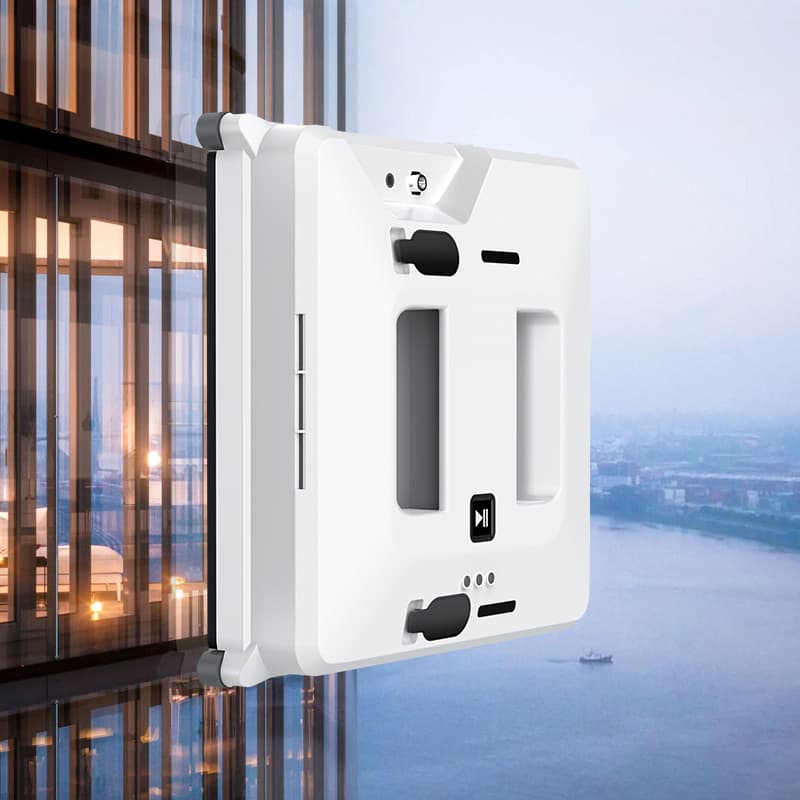
Robot Window Cleaners: The 2026 Honest Buyer's Guide
Windows are the one household chore almost everyone postpones. Spraying, scrubbing, and squeegeeing by hand is tedious, and cleaning the outside of upper-floor glass ranges from awkward to genuinely risky. Robot window cleaners promise to take over: you place a small machine on the glass, it suctions itself in place, and scrubs its way across the pane while you do something else.
The two questions every buyer asks are the same: will it fall off, and will it actually leave the glass clean? This guide answers both with what the current generation of machines can honestly do. You will learn exactly how these robots work, which specs decide whether one is worth your money, the compatibility checks most buyers skip, and who should not buy one at all.
How Robot Window Cleaners Actually Work
A window cleaning robot is simpler than it looks. Four systems do almost all the work.
Suction. A vacuum motor pulls air through the underside of the robot, pressing it against the glass. Suction ratings range from around 2,800 Pa on older models to 8,000 Pa or more on current flagships like the Ecovacs Winbot W2S Omni and the MOVA N1 — and Ecovacs cites grip forces above 800N on its W2 series. This vacuum is the entire reason the robot stays on vertical glass, which is why it is the most important spec on the box.
Scrubbing. Microfiber pads on the underside do the cleaning, either as rotating pads or as flat drag pads the robot slides across the glass. The pad is the squeegee here: it is what actually removes the film of dust, pollen, and fingerprints.
Spraying. While scrubbing, the robot mists the glass with cleaning solution or water. Designs differ a lot: some models carry a single manual spray, others use dual nozzles, and premium machines like the W2 series use triple wide-angle atomizing nozzles. Higher-pressure, multi-nozzle systems distribute moisture more evenly, and even coverage is the difference between a streak-free pane and one you have to touch up by hand. Ultrasonic mist systems, like the one on the compact Winbot MINI, break the solution into a fine fog for lighter dust.
Navigation and safety. Edge-detection sensors read the window frame or the edge of the glass so the robot knows where the pane ends. Route-planning software (Ecovacs calls its version WIN-SLAM) moves the robot in a systematic pattern instead of wandering. Layered on top is the safety stack: suction monitoring that reacts within fractions of a second if grip drops, a safety rope tethered to a fixed point indoors, and a backup battery — usually described as a UPS — that holds the robot to the glass for 20 to 30 minutes if power cuts out mid-clean. The HOBOT-2S, for example, ships with a 4.5-meter rope rated to a 200 kg breaking strength plus a 20-minute hold, while the Winbot W2S Pro Omni combines a 12-tier safety system with an 800-newton-capable tether and over 30 minutes of power-loss protection.
Knowing this anatomy matters because every buying decision maps to one of these systems: suction strength, spray coverage, edge navigation, and the safety stack.
Do They Really Work? The Honest Answer
Yes — with one crucial caveat: window robots are maintenance machines, not rescue machines.
What they do well is exactly what makes windows annoying: the slow accumulation of light dust, pollen, fingerprints, and smudges on glass you would otherwise ignore for months. Run one regularly and the glass stays clear with almost no effort. Reviewers consistently credit the current generation with restoring ordinary dirty glass to sparkling in a single pass, and owners report that the real win is consistency: the chore gets done every few weeks instead of every few seasons.
What they do not do well is rescue work. Multiple sources, including customer reviews on digitec's window-robot listings, report that rain-baked exterior grime is not handled well regardless of the cleaning mode selected, and streaks can appear on freshly cleaned panes. Professional window cleaners still win decisively on deep grime, paint splatter, and window frames — the robot cleans the glass, not the frame, the sill, or the tracks. If your exterior windows have not been cleaned in years, hire a professional first and let a robot keep them clean afterward.
The other honest limitation is edges. Older round-pad designs left a visible dirty border — a "halo" — around the pane, which is the single most common complaint about the category. Manufacturers have responded: the Winbot W2S Omni's TruEdge scrubbing pad tracks within about 1 mm of the frame at 200 RPM, and the HUTT S7 uses a similar edge-focused system. When you shop, edge coverage is a specification to look for, not a given.
Two practical notes: these machines are not silent (expect roughly 66 to 72 dB, about the level of a normal conversation with background noise), and they are not instant — Ecovacs quotes roughly one square meter per 90 seconds on the W2S Pro, so a wall of glass takes real time. But it is time you spend elsewhere, which is the entire point.
The Six Decision Factors That Actually Matter
Forget the marketing feature list. These are the six things that decide whether a window robot is worth your money.
1. Suction power. This is the grip that keeps the machine on vertical glass. Compare like for like: the Winbot W2 Omni runs about 5,500 Pa while the newer W2S reaches 8,000 Pa — roughly 1.5x the headroom. Stronger suction matters most on tall panes, slick glass, and outdoor surfaces where wind and gravity add load.
2. Spray system. Even moisture coverage is what separates streak-free results from touch-ups. A robot with dual or triple spray nozzles and automatic dispensing will outperform a single-nozzle model on the same glass, especially on larger panes. If you are comparing two models at similar prices, the one with the better spray system usually leaves the better finish. Dual-spray designs exist well below flagship prices — the 2k50 Smart Dual-Spray Window Cleaning Robot ($98.01), for example, brings a two-nozzle setup to the sub-$100 tier, which is worth knowing when flagship models sit at $300 to $600.
3. Edge coverage. Ask how close the cleaning pads get to the frame. Round-pad robots that rely on the frame as a bumper leave the widest uncleaned border; machines with dedicated edge-scrubbing systems or square profiles reach closer. If your windows have wide, visible borders, this spec matters more than suction.
4. Corded or cordless. (Detailed below — it is the single biggest lifestyle decision.)
5. Framed versus frameless compatibility. (Detailed below — and the check most buyers skip.)
6. The safety stack. Verify three things: a physical safety rope with a stated strength rating, backup-battery hold time on power loss (20 to 30 minutes is the current norm), and edge or gravity sensors that detect a loss of grip. Marketing phrases like "12-layer protection" are packaging; rope rating plus hold time are the substance.
Corded vs. Cordless: The Real Tradeoff
This is the decision that shapes how the robot fits your home.
Corded robots — the Winbot W2S Omni and most HOBOT models among them — run on unlimited runtime from a power adapter. The tradeoff is that you route a cable to every window, which means an outlet needs to be within reach of each pane, and you re-route between windows.
Cordless robots — like the Winbot W2 Pro Omni — carry a battery station instead. The current generation delivers about 110 minutes of cleaning per charge, which covers a serious session before you dock it again. The portable station solves the biggest real-world annoyance (no outlet near the window) and removes the power-cut fall risk entirely, since the machine never depends on wall power.
The decision rule is simple: if your windows sit near outlets and behind minimal furniture, corded is simpler and cheaper. If your glass is far from outlets, behind heavy furniture, or spread across a large apartment, cordless freedom is worth the premium. Do not pay for cordless if you will always clean within arm's reach of a socket.
Framed vs. Frameless: The Compatibility Check Everyone Skips
This is the least glamorous section of the guide and the one most likely to save you from a bad purchase.
Some robots detect window edges using sensors that expect a physical frame. A first-hand review of the MOVA N1 found this out the hard way: on a frameless sliding panel, the edge sensors could not find the boundary and the robot nearly fell off. The lesson is blunt — if your windows are frameless glass (sliding panels, floor-to-ceiling sheets, glass balustrades), only buy a model that explicitly supports frameless glass. HOBOT's current SP10, for instance, lists framed and frameless support explicitly, which is the kind of statement you want to see.
Beyond frames, check the fine print on three more things: the minimum and maximum pane size (small bathroom windows can be below the minimum), the glass thickness range (some units struggle with very thick double-glazing), and surface restrictions (textured, frosted, or curved glass is generally incompatible). Handles, decals, and alarm stickers on the glass can also confuse navigation — digitec reviewers note that stickers sometimes need removing before a run.
Five minutes with a tape measure and the manual's compatibility page prevents the most common regret in this category.
Who Should Skip a Window Cleaning Robot
Honest guides name their exclusions, so here are the cases where you should not buy one:
The same logic applies to other household robots we have covered: an automatic litter box earns its keep through daily consistency, not raw power. Frequency beats force in every one of these categories.
Robot vs. Hiring a Professional
The final question is the economic one. Professional window cleaners charge per visit, and high-rise jobs carry a premium for access equipment and liability. A robot is a one-time purchase you reuse for years — at bi-monthly cleaning frequency, even a budget model pays for itself quickly against repeat service visits.
What the robot buys you beyond money is convenience: no scheduling, no strangers in your home, and a single pane cleaned in minutes whenever you notice it. What it does not buy you is the deep clean: professionals still own frames, sills, tracks, paint splatter, and the first rescue pass on neglected glass.
The sensible middle path is the one reviewers keep landing on: hire a professional for the deep clean once or twice a year, and let a robot handle the maintenance in between. That is the use case the technology was actually built for.
What to Check Before You Buy: The Checklist
The Bottom Line
Robot window cleaners are not magic, and they are not a scam either. They are maintenance machines: suction, spray, and systematic navigation that keep ordinary glass consistently clear with minimal effort from you. Buy one if you have several flat, smooth, reachable panes and you will actually run it every few weeks. Check the compatibility fine print — especially frameless glass, minimum pane size, and the safety stack — before you commit. Choose corded if your outlets cooperate and cordless if they do not. And skip the category entirely if your glass is textured, your panes are frameless on a robot that needs frames, or a professional is what the job really calls for. Get those calls right and the robot quietly removes one chore from your life. Get them wrong and it is just an expensive way to learn what the manual said on page one.