Self-Cleaning Cat Litter Box: The 2026 Buyer's Guide
Scooping is the worst part of cat ownership. This 2026 guide compares self-cleaning litter box designs, runs the real cost math, and tells you who should skip.
By 2k50 Tech Team
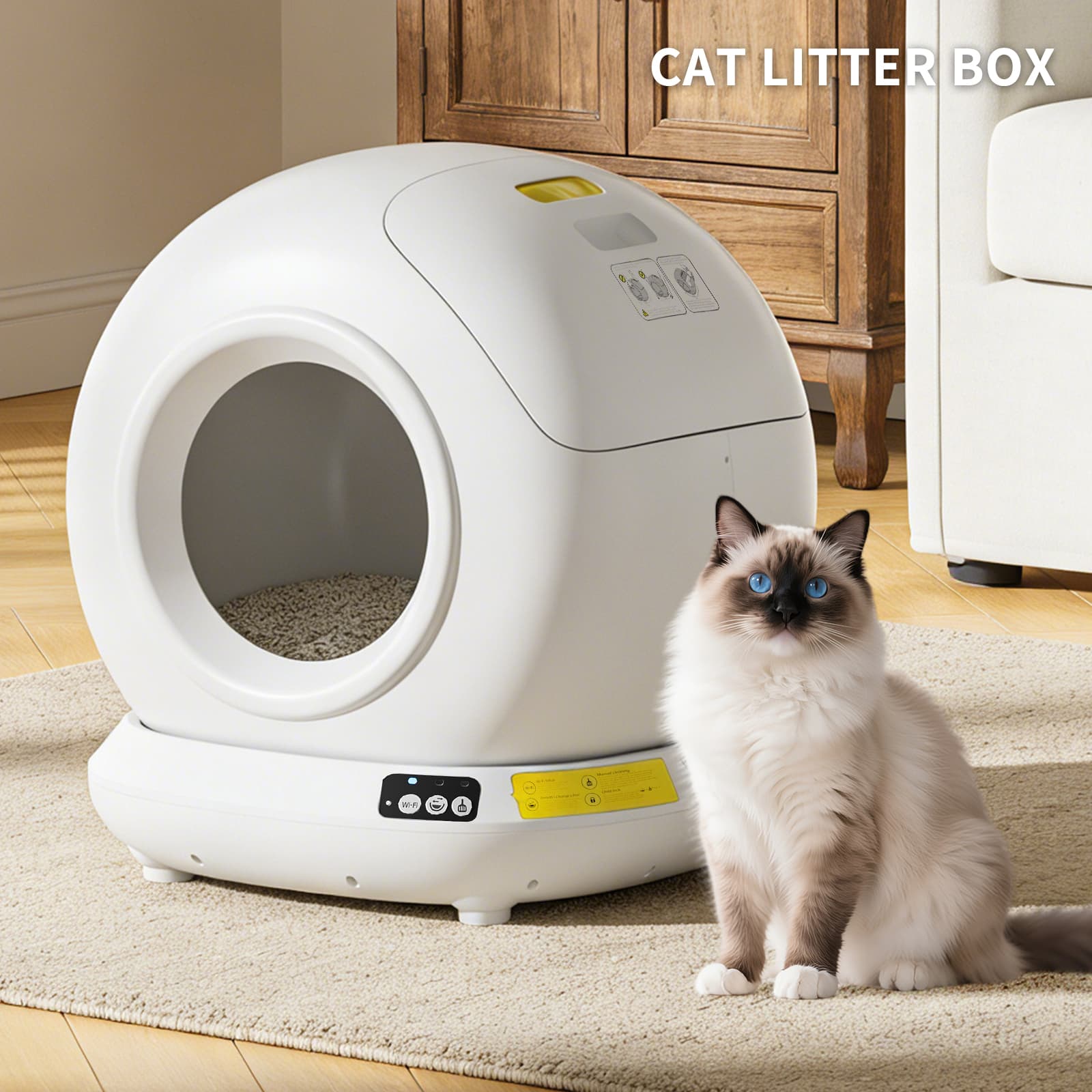
Scooping the litter box is the one chore every cat owner would delete from their life. A self-cleaning litter box promises exactly that: your cat does its business, and a machine handles the rest — no scooping, less smell, a box that's always fresh.
But these machines cost anywhere from $150 to $700, they're bigger and louder than a plastic tray, and the internet is full of conflicting advice plus a few genuinely scary stories about cats getting hurt. So the real question isn't "are they cool" — it's "will one actually work for my cat, my home, and my budget?"
This guide answers that. You'll learn how the three main designs work, the five factors that decide whether owners love or regret their purchase, what "safe" really means in practice, the honest two-year cost math, and exactly who should buy one — and who should skip it.
How a Self-Cleaning Litter Box Actually Works
Every automatic litter box follows the same basic loop: your cat uses the box, sensors confirm the cat has left, a timer waits (so clumps can harden), and then a mechanism separates the waste from the clean litter and seals it in a compartment. What differs is the mechanism. There are three main designs on the market in 2026:
Rotating globe. The most recognizable type. After each visit, the large drum rotates, sifting clumps through a grate into a sealed waste drawer below. Premium models in this category add Wi-Fi, app-based usage tracking, and weight monitoring — at premium prices around $500–700. The trade-off: they're big, and the cleaning cycle is the most mechanically complex.
Rake systems. A motorized rake combs through the litter a set number of minutes after each visit, pushing clumps into a covered waste compartment or disposable tray. Some use crystal litter that absorbs liquid instead of clumping. Rake models are often quieter than rotating globes and usually cheaper, but long-term owner reviews note more frequent jams and the recurring cost of proprietary trays.
Conveyor/belt systems. The basin rotates slowly throughout the day; as litter passes over the mechanism, clumps are sifted out and lifted into the waste bin. A full cycle can take 30–60 minutes, but the motion is gentle. The catch: litter can accumulate around the belt edges and interrupt the cycle, and the footprint tends to be large.
All three share the same weak points, too: sensors that must detect the cat reliably, a waste bin that must be emptied regularly, and moving parts that need occasional deep cleaning. Most buying mistakes come from picking the wrong mechanism for the wrong cat — not from picking the wrong brand.
The 5 Factors That Decide Whether You'll Love It
After digging through buying guides, long-term owner reviews, and hundreds of community reports, the same five factors keep deciding satisfaction. In order of importance:
1. Safety sensors — the non-negotiable. A safe automatic litter box has multiple, overlapping sensors: proximity/infrared sensors that stop the cycle when a cat approaches, weight sensors that detect a cat inside, and anti-pinch protection that halts the mechanism on resistance. This matters more than any app feature. The physical design matters even more than the software: the entrance should never fully close while a cat could be inside, and even with the power off, the opening must stay accessible. Avoid cheap models with closing entrances and single-sensor setups — most of the scary stories online trace back to exactly those designs.
2. Noise. A cleaning cycle that sounds like a small appliance starting up is fine for most cats; one that slams and grinds is not. Reviewers consistently report that rake systems tend to run quieter than rotating globes, and that anything in the roughly 35–40 dB range is the comfort zone — especially if the box sits near a bedroom. A loud cycle doesn't just annoy you; it can frighten a shy cat into avoiding the box entirely, which defeats the whole purpose. This matches what buying guides like [Phoebe's Choice's 2026 roundup](https://phoebechoice.com/pets/best-self-cleaning-litter-boxes/) emphasize: noise level is a top selection criterion, not an afterthought.
3. Litter compatibility. This is the number-one cause of jams and malfunctions, full stop. Most rotating and rake systems are engineered for clumping clay litter. Switch to crystal, paper, pellets, or tofu litter in a box designed for clumping clay and you'll get errors, incomplete cycles, and smeared waste. Before you fall in love with a model, check which litter it was tested with — and be honest about whether you're willing to switch litters permanently. As [Paw and Patio's buyer's checklist](https://pawandpatio.com/blog/clean-self-cleaning-litter-box/) puts it, using the wrong litter is the single biggest cause of poor performance.
4. Waste system and odor control. The whole point is sealed waste. Look at the drawer or bin: how many days of waste does it hold for one cat (a week or more is the benchmark), how well is it sealed, and does the design include deodorizing such as carbon filters or sealed bags? In a multi-cat household, a small bin fills fast and you're back to emptying it every day — the labor just moves from scooping to emptying.
5. Your cat's temperament and size. Bold, curious cats adapt in days. Nervous cats may need weeks — or may never accept a machine that moves. Kittens under about 3 pounds (roughly 8–12 weeks) often don't trigger weight sensors at all, so most guides recommend manual mode until they're bigger. Large breeds and seniors need a low, wide entrance and a spacious interior; a cramped cabin deters use no matter how smart the box is.
Safety: What "Safe" Really Means in Practice
Let's be direct, because this is where buyers are most anxious: a well-designed self-cleaning litter box is safe, and a badly designed one is not. "Well-designed" is specific. It means infrared sensors that detect your cat approaching, weight sensors that detect your cat inside, and anti-pinch protection that stops everything the moment there's resistance. It means an adjustable cycle delay — giving your cat time to leave and clumps time to harden — and an entrance that never closes on the cat, by design, not just by software.
There's one more honest trade-off to know: when a machine hides the waste, you see it less. Changes in stool or urination are often the first sign of digestive or urinary problems, and owners of manual boxes notice them during scooping. If you automate, compensate: check the waste drawer when you empty it, and consider a model with app-based visit tracking, which can flag unusual frequency. The technology can replace scooping; it shouldn't replace paying attention.
The Real Cost Math: Two Years of Ownership
Nobody should buy an automatic litter box to save money, because you won't. Here's the honest math over two years for one cat:
What you're buying is time and consistency: 5–10 minutes of scooping a day is 30–60 hours a year, and the box is fresh for every visit instead of "fresh whenever you remembered to scoop." Whether that trade is worth a few hundred extra over two years is a personal call — but make it with the real numbers, not the fantasy that the machine pays for itself.
Honest Pros and Cons
The genuine upsides: no daily scooping; the box is clean for every visit, which matters most in multi-cat homes; sealed waste drawers control odor better than an open tray; you can leave for a long workday or a weekend without the box becoming disgusting; and app-connected models log visits and weight, which is genuinely useful health data.
The genuine downsides: the price, obviously; jams and sensor errors happen, and troubleshooting an expensive machine late at night is its own special frustration; the cleaning cycle can scare nervous cats; you still have to empty the waste bin, top up litter, and deep-clean the unit monthly — one four-year owner of a premium model [reviewed on Petful](https://www.petful.com/spotlight/is-the-litter-robot-4-worth-it/) calls washing the large globe "honestly pretty cumbersome" without outdoor space; proprietary liners and trays add a subscription-like ongoing cost; and some cats simply refuse, full stop.
Neither list decides on its own. Together, they're the reality check the marketing skips.
Who Should Buy One — and Who Should Skip It
It's a good fit if: you have multiple cats and want every visit to meet a clean box; your workdays are long or you travel and hate coming home to a neglected tray; scooping is the chore you resent most; or you want visit and weight tracking as an early-warning health system.
Skip it — for now — if: your cat is genuinely nervous around moving appliances; you have a kitten under about 3 lbs (wait until they're bigger); your budget is tight (a $25 tray and good litter is a perfectly fine setup); you don't have floor space for a unit roughly twice the size of a normal box; or the idea of troubleshooting sensors sounds worse than scooping. There's no shame in the manual life — it's cheaper, simpler, and cats have used trays happily for decades.
Getting Your Cat to Actually Use It
Most "my cat hates it" stories are really "I introduced it wrong" stories. The transition that works: set the new box next to the old one, leave it powered off for a few days, and let your cat explore it as furniture. Use the same litter your cat already likes — this is not the week to switch formulas. Then run it in manual mode for a while before enabling automatic cycles, and set a long cycle delay at first so the machine never surprises a cat that's still nearby.
Give it one to two weeks. Most cats adapt; a minority never will. Buy from somewhere with a real return window, because the only test that matters is your specific cat's opinion.
Building a Low-Maintenance Pet Corner
An automatic litter box is one piece of a bigger idea: a home where routine pet care mostly runs itself. If you're going that direction, the pieces genuinely complement each other. an automated feeder handles meals on a schedule while you're away, a circulating water fountain keeps water fresh and encourages cats to drink more, and a pet monitoring camera lets you check on them — and talk to them — from anywhere. None of these replaces you. Together, they replace the daily chores.
How This Guide Was Researched
Transparency matters, so here's the method: we compared the three main self-cleaning mechanisms (rotating globe, rake, conveyor) on design, noise, litter compatibility, and failure modes; we read current buying guides and checklists from pet publications; and we dug through long-term owner reports — including multi-year ownership reviews and large community threads — to find which problems actually recur. We did not bench-test every model in a lab, so this guide deliberately avoids crowning a single "winner" and focuses instead on the decision factors that predict whether you'll be happy with whichever model you choose.
---
The bottom line: a self-cleaning litter box is a genuinely good product for the right household — multiple cats, a busy schedule, a cat that's not easily spooked — and an expensive regret for the wrong one. Match the machine to your cat first and the feature list second, do the real cost math, and introduce it slowly. Get those three things right and you'll wonder why you ever owned a scoop.